Modern HR is no longer driven by assumptions—it is driven by data. Every employee action, attendance record, payroll transaction, recruitment activity, and performance review generates valuable insights that can help organizations improve efficiency and make informed decisions.
An HR Analytics & Reporting System transforms raw HR data into meaningful reports and dashboards, helping leaders identify trends, monitor KPIs, and optimize workforce performance.
With the right analytics, businesses can reduce costs, improve employee engagement, and make confident, data-driven decisions.
What is HR Analytics?
HR Analytics is the process of collecting, analyzing, and visualizing workforce data to improve HR operations and business outcomes.
It provides insights into:
- Employee Performance
- Attendance Trends
- Leave Patterns
- Payroll Costs
- Recruitment Metrics
- Employee Turnover
- Department Productivity
- Training Effectiveness
- Workforce Growth
- HR Compliance
Instead of manually reviewing spreadsheets, organizations get real-time dashboards and actionable reports.
Challenges Without HR Analytics
Organizations relying on manual reporting often experience:
- Delayed decision-making
- Inaccurate reports
- Data inconsistencies
- Limited visibility
- Difficult trend analysis
- Poor workforce planning
- Time-consuming report generation
A centralized analytics platform solves these problems.
Benefits of HR Analytics & Reporting
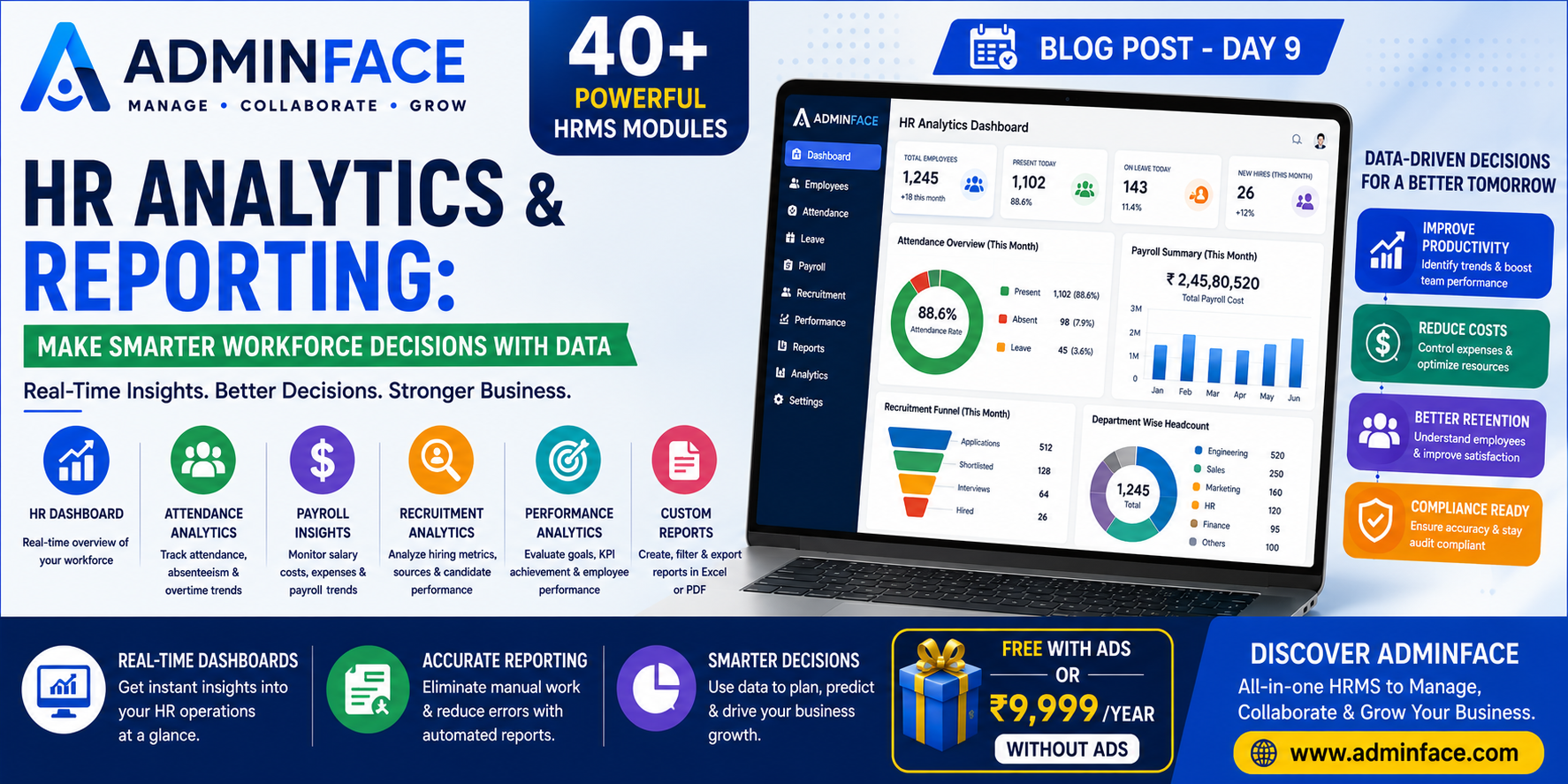
1. Real-Time HR Dashboard
Monitor key HR metrics in one place:
- Total Employees
- New Hires
- Active Employees
- Employees on Leave
- Attendance Rate
- Payroll Summary
Managers can instantly understand workforce health.
2. Attendance Analytics
Track attendance trends with detailed reports.
Analyze:
- Daily Attendance
- Late Arrivals
- Absenteeism
- Overtime Hours
- Shift Performance
- Attendance Percentage
3. Payroll Insights
Gain visibility into payroll expenses.
View:
- Salary Distribution
- Payroll Costs
- Bonus Trends
- Overtime Costs
- Department Payroll
- Payroll History
4. Recruitment Reports
Measure hiring performance through:
- Open Positions
- Time to Hire
- Cost per Hire
- Candidate Sources
- Interview Success Rate
- Offer Acceptance Rate
5. Performance Analytics
Evaluate workforce performance using:
- Goal Achievement
- KPI Progress
- Performance Ratings
- Employee Development
- Team Performance
- Recognition Trends
6. Leave Analytics
Monitor leave usage across the organization.
Track:
- Leave Balances
- Leave Trends
- Department Leave Patterns
- Sick Leave Analysis
- Annual Leave Usage
7. Custom Reports
Generate reports based on your organization's needs.
Examples include:
- Employee Directory
- Department Reports
- Payroll Reports
- Attendance Reports
- Compliance Reports
- Recruitment Reports
- Performance Reports
Reports can be exported and shared easily.
8. Data-Driven Decision Making
Analytics helps leaders:
- Improve workforce planning
- Identify high-performing teams
- Reduce absenteeism
- Optimize hiring strategies
- Improve employee retention
- Plan future growth
Why Businesses Need HR Analytics
Organizations benefit by:
- Making faster decisions
- Improving productivity
- Increasing operational efficiency
- Reducing HR costs
- Enhancing employee engagement
- Identifying workforce trends
- Supporting business growth
Why Choose AdminFace?
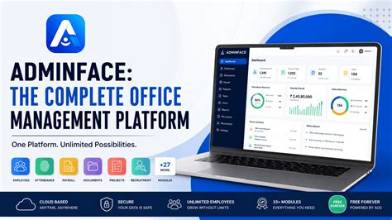
AdminFace includes a comprehensive HR Analytics & Reporting Module within its 40+ integrated HRMS modules.
Key Features
- Interactive HR Dashboard
- Attendance Analytics
- Payroll Reports
- Recruitment Analytics
- Performance Insights
- Leave Reports
- Custom Report Builder
- Export to Excel & PDF
- Real-Time KPIs
- Cloud-Based Platform
- Multi-Organization Support
- Role-Based Access
The Analytics module integrates seamlessly with Attendance, Payroll, Recruitment, Performance, Leave Management, and Employee Records, giving organizations a complete view of their workforce.
Best Practices for HR Analytics
To maximize HR analytics:
- Track meaningful KPIs.
- Review dashboards regularly.
- Automate report generation.
- Use data to support decisions.
- Share insights with leadership.
- Monitor trends over time.
Final Thoughts
Data is one of the most valuable assets in HR. By using HR Analytics & Reporting, organizations gain deeper insights into workforce performance, improve planning, and make smarter business decisions.
With AdminFace, businesses can monitor every aspect of HR operations through powerful dashboards and reports, transforming data into actionable insights.