Every successful organization depends on high-performing employees. However, measuring performance through annual reviews alone is no longer enough. Modern businesses need continuous feedback, goal tracking, and data-driven performance insights.
A Performance Management System (PMS) helps organizations align employee goals with business objectives, improve productivity, recognize achievements, and support professional development.
By replacing manual evaluations with a structured digital process, businesses create a culture of accountability, transparency, and continuous improvement.
What is a Performance Management System?
A Performance Management System is software that helps organizations evaluate, monitor, and improve employee performance throughout the year.
It enables HR teams and managers to:
- Set Employee Goals
- Monitor KPIs
- Conduct Performance Reviews
- Provide Continuous Feedback
- Track Achievements
- Identify Skill Gaps
- Create Development Plans
- Generate Performance Reports
Everything is managed through one centralized platform.
Challenges of Traditional Performance Reviews
Many organizations still rely on manual performance reviews, which often result in:
- Inconsistent evaluations
- Delayed feedback
- Lack of transparency
- Poor employee engagement
- Subjective assessments
- Limited performance visibility
- Difficult documentation
- Missed development opportunities
A digital performance system solves these challenges by making reviews continuous, measurable, and transparent.
Benefits of Performance Management Software
1. Goal Setting & OKRs
Managers can assign measurable goals and Objectives & Key Results (OKRs) to employees.
Examples include:
- Quarterly Goals
- Annual Objectives
- Department KPIs
- Individual Targets
- Team Objectives
Employees always know what they are working toward.
2. Continuous Feedback
Performance shouldn't be discussed only once a year.
Managers can provide:
- Weekly Feedback
- Monthly Check-ins
- Recognition
- Coaching Notes
- Improvement Suggestions
Continuous feedback helps employees grow faster.
3. Performance Reviews
Conduct structured evaluations using standardized review forms.
Review methods include:
- Self Assessment
- Manager Review
- Peer Review
- 360° Feedback
- Final Performance Rating
4. KPI Tracking
Track important metrics such as:
- Sales Performance
- Attendance
- Productivity
- Project Completion
- Customer Satisfaction
- Training Progress
This ensures evaluations are based on measurable outcomes.
5. Employee Development Plans
Identify skill gaps and create personalized growth plans.
Support employees with:
- Training Programs
- Certifications
- Mentoring
- Career Development
- Learning Goals
6. Recognition & Rewards
Recognize outstanding employees through:
- Achievement Awards
- Employee of the Month
- Performance Bonuses
- Appreciation Badges
- Recognition Announcements
Employee recognition improves motivation and retention.
7. Performance Reports
Generate insightful reports including:
- Individual Performance
- Department Performance
- Goal Completion Rate
- KPI Achievement
- Skill Gap Analysis
- Performance Trends
These reports help management make informed decisions.
8. Employee Self-Service
Employees can:
- View Goals
- Submit Self Reviews
- Track KPIs
- Receive Feedback
- View Performance History
- Download Review Reports
This encourages transparency and accountability.
Why Businesses Need Performance Management Software
Organizations benefit by:
- Improving employee productivity
- Aligning goals with business objectives
- Increasing employee engagement
- Supporting career development
- Identifying top performers
- Reducing employee turnover
- Building a performance-driven culture
Why Choose AdminFace?
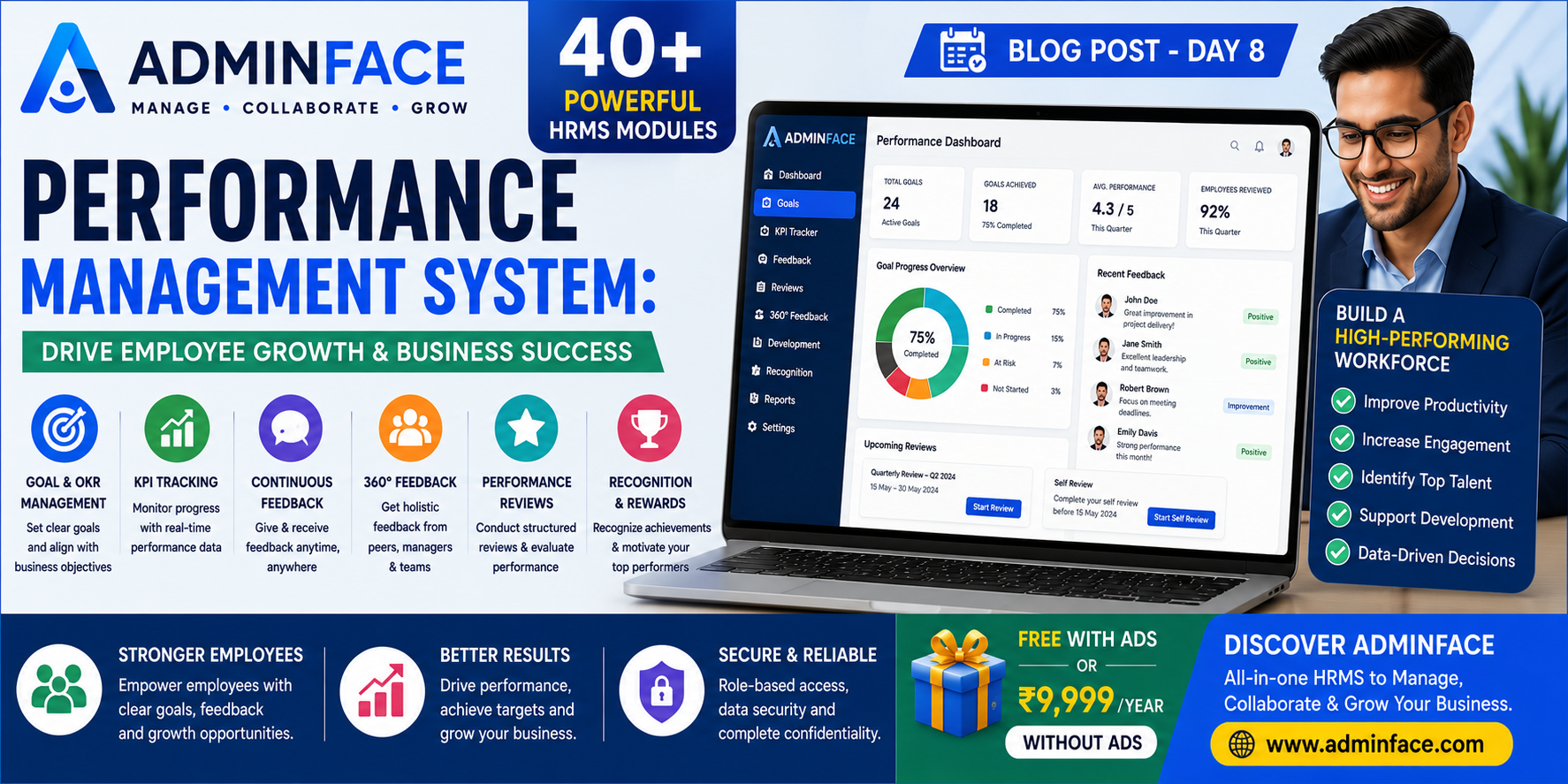
AdminFace includes a comprehensive Performance Management Module within its 40+ integrated HRMS modules.
Key Features
- Goal & OKR Management
- KPI Tracking
- Continuous Feedback
- Performance Reviews
- 360° Feedback
- Employee Development Plans
- Recognition & Rewards
- Performance Analytics
- Employee Self-Service
- Cloud-Based Platform
- Multi-Organization Support
- Secure Role-Based Access
The Performance Management module integrates seamlessly with Employee Management, Training, Payroll, Recruitment, and HR Analytics, giving organizations a complete workforce management solution.
Best Practices for Performance Management
To maximize employee performance:
- Set measurable goals.
- Conduct regular feedback sessions.
- Use data-driven KPIs.
- Recognize employee achievements.
- Encourage self-assessments.
- Invest in employee development.
Final Thoughts
A modern Performance Management System helps organizations move beyond annual appraisals and create a culture of continuous growth.
With AdminFace, businesses can align employee performance with organizational goals, recognize achievements, support career development, and make informed HR decisions through real-time analytics.