Managing employees is one of the biggest challenges for any organization. Whether you have 10 employees or 10,000, handling attendance, payroll, leave requests, recruitment, documents, and performance manually can quickly become overwhelming.
A modern Human Resource Management System (HRMS) simplifies these processes by bringing everything together in one secure platform. Businesses can automate repetitive HR tasks, reduce errors, save time, and improve the overall employee experience.
In today's competitive environment, companies that adopt HR technology gain a significant advantage through increased efficiency, better compliance, and improved workforce management.
What is an HRMS?
A Human Resource Management System (HRMS) is software designed to manage all employee-related operations from a single platform.
Instead of maintaining multiple spreadsheets and paperwork, HR teams can manage everything digitally, including:
- Employee records
- Attendance tracking
- Leave management
- Payroll processing
- Recruitment
- Performance reviews
- Employee documents
- Expense claims
- Asset management
- Reports and analytics
An HRMS centralizes information, making HR operations faster, more accurate, and easier to manage.
Common Challenges Without an HRMS
Many organizations still rely on manual processes that create unnecessary complications.
Some of the most common problems include:
- Manual attendance tracking
- Payroll calculation errors
- Lost employee documents
- Difficulty tracking leave balances
- Time-consuming recruitment
- Poor communication
- Delayed approvals
- Limited reporting
- Compliance risks
- Duplicate employee records
These issues consume valuable time that HR professionals could spend on strategic initiatives.
Benefits of Using an HRMS
1. Save Time Through Automation
Routine HR tasks can be automated, allowing HR teams to focus on employee development instead of paperwork.
Automation helps with:
- Attendance calculation
- Leave approvals
- Payroll processing
- Employee onboarding
- Notifications
- Report generation
2. Improve Payroll Accuracy
Payroll is one of the most sensitive HR functions.
An HRMS helps calculate:
- Basic salary
- Overtime
- Deductions
- Bonuses
- Incentives
- Taxes
- Leave deductions
Automation significantly reduces payroll errors and ensures employees are paid accurately and on time.
3. Simplify Attendance Management
Tracking attendance manually is both time-consuming and error-prone.
A modern HRMS allows organizations to:
- Record clock-in and clock-out
- Track working hours
- Manage shifts
- Handle late arrivals
- Monitor overtime
- Generate attendance reports
Employees can also view their attendance history through a self-service portal.
4. Easy Leave Management
Employees can submit leave requests online, while managers receive instant notifications for approval.
Benefits include:
- Leave balance tracking
- Holiday calendars
- Leave policies
- Approval workflows
- Automatic updates
- Leave reports
No more paper forms or lengthy email chains.
5. Better Employee Records
Employee information remains securely stored in one place.
Organizations can maintain:
- Personal information
- Employment history
- Documents
- Emergency contacts
- Educational details
- Experience records
- Salary history
This makes retrieving employee information quick and efficient.
6. Faster Recruitment
Hiring the right talent becomes much easier with an HRMS.
Recruitment features include:
- Job postings
- Resume management
- Candidate tracking
- Interview scheduling
- Offer letters
- Hiring reports
HR teams can manage the complete recruitment process from a single dashboard.
7. Performance Management
Employee performance can be monitored throughout the year.
Managers can:
- Set goals
- Conduct reviews
- Provide feedback
- Measure KPIs
- Track achievements
Regular performance evaluations encourage employee growth and improve organizational productivity.
8. Employee Self-Service Portal
Employees can independently manage many HR tasks.
They can:
- Apply for leave
- Download payslips
- Update personal information
- View attendance
- Access company documents
- Track requests
This reduces HR workload while improving employee satisfaction.
9. Powerful Reports and Analytics
Data-driven decisions are easier with real-time reports.
Organizations can analyze:
- Attendance trends
- Payroll costs
- Employee turnover
- Leave patterns
- Recruitment performance
- Department productivity
These insights help leadership make informed business decisions.
10. Enhanced Data Security
Employee information is highly sensitive.
A secure HRMS offers:
- Role-based access
- Data encryption
- Audit logs
- Backup systems
- Secure authentication
- Permission management
Protecting employee data builds trust and supports regulatory compliance.
Who Can Benefit from an HRMS?
An HRMS is valuable for organizations of all sizes, including:
- Startups
- Small businesses
- Medium-sized companies
- Large enterprises
- Educational institutions
- Healthcare organizations
- Manufacturing companies
- Retail businesses
- IT companies
- Non-profit organizations
Regardless of industry, any organization that manages employees can benefit from HR automation.
Why Choose AdminFace?
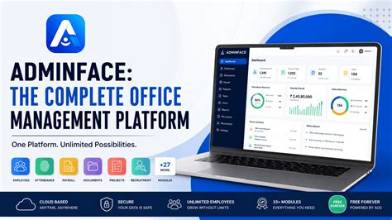
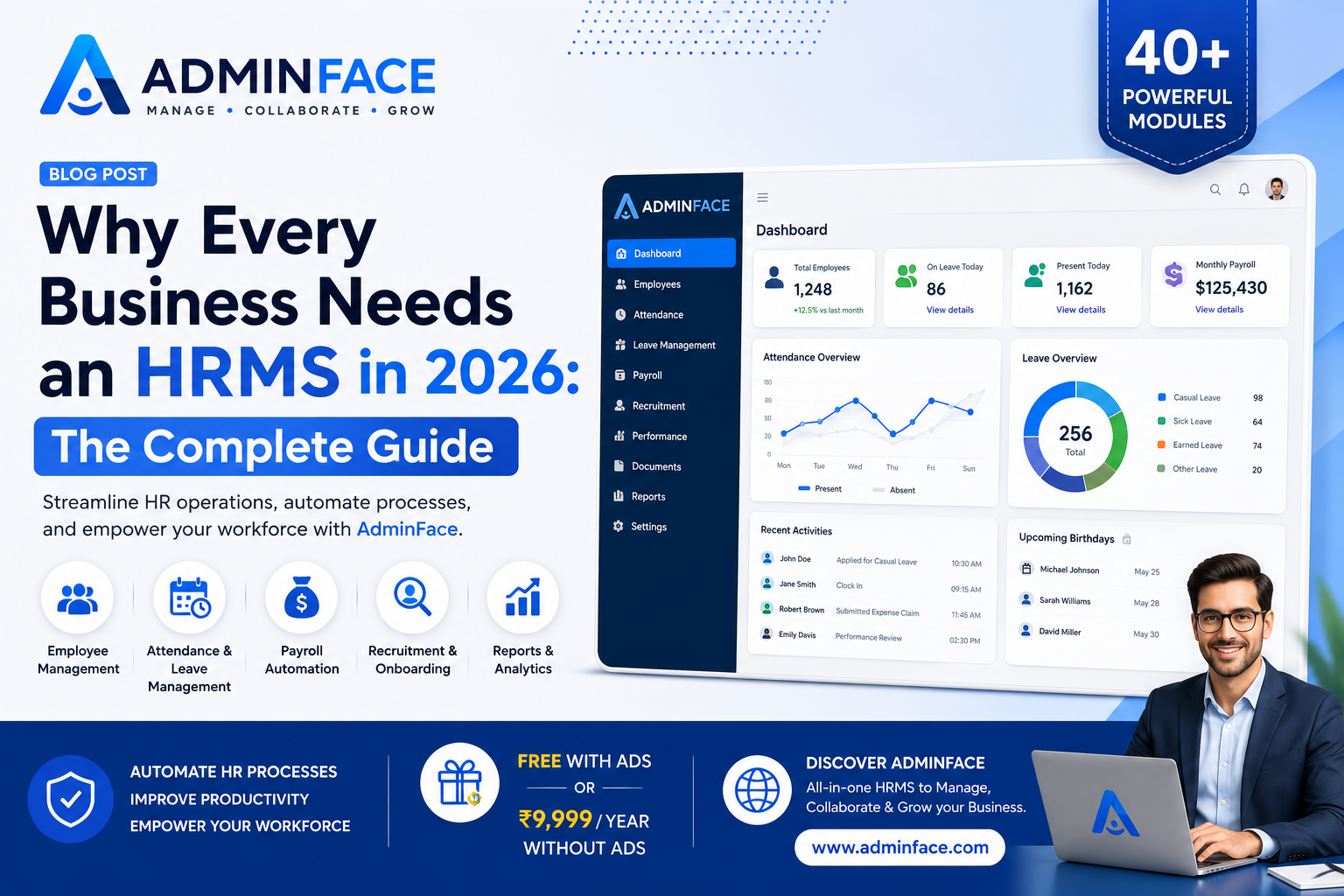
AdminFace is a comprehensive HRMS designed to simplify workforce management for modern organizations.
Key capabilities include:
- Employee Management
- Attendance Management
- Leave Management
- Payroll
- Recruitment
- Performance Management
- Document Management
- Asset Management
- Expense Management
- Employee Self-Service
- Reports & Analytics
- Multi-Organization Support
- Role-Based Access Control
- Workflow Automation
- Mobile-Friendly Experience
With 40+ integrated modules, AdminFace helps organizations streamline HR operations from recruitment to retirement, all within a single platform.
Final Thoughts
Human resource management is no longer just about maintaining employee records. Modern organizations need intelligent tools that automate processes, reduce administrative effort, and support strategic decision-making.
An HRMS helps businesses improve efficiency, ensure accuracy, strengthen compliance, and create a better experience for both HR teams and employees.
Whether you're a growing startup or a large enterprise, investing in the right HRMS today can prepare your organization for long-term success.